We all know the classic theme song which plays in our heads every time we see that tell-tale fin poke out from the ocean waves. It seems to be a primal fear which awakens in us when we imagine the danger beneath the waves- ever present and yet invisible until it is too late.
Stephen Spielberg’s, Jaws, played well on these fears. However, surprisingly, wide cultural fear of sharks hasn’t been around for long. The 1975 thriller could have been the starting point for the worldwide terror.
You may have already heard a few statistics about how rare it is for a shark to actually kill. For instance, you are more likely to die from a coconut falling onto your head or a vending machine crushing you than being attacked by a shark. While I can neither confirm nor deny these claims, they at least attest to the fact that sharks are not as aggressive as they are often depicted.
Incredibly few people are even attacked by sharks compared to the 100,000,000 sharks that are estimated to be killed every year! This isn’t to say that sharks cannot kill but they are hardly vengeful hunters. It is often said that most attacks happen only because a shark is curious by nature and, unfortunately, the fish investigate with their mouths.
There is, in fact, a long list of reasons to show how sharks are not as vicious as we think they are. Many statistics show that there isn’t actually much reason to be fearful of the creatures, so why do many of us ignore it?
This is about the point where people take sides: One side proclaiming sharks’ innocence and the other arguing that their uncle’s friend’s roommate was viciously attacked by one while swimming in a river.
Fear is a strong emotion which ironically can come from very small problems and doesn’t need much encouragement to remain. It is definitely why we struggle to think that sharks aren’t the villian they have been made out to be. Let’s break down what seems to be making this difficult.
First and foremost is the cuteness factor. This, believe it or not, is an actual driver explored in human behavioral studies. What makes something cute? Many sources say that certain physical traits, including large eyes, smaller mouths, larger head to body ratio, and relatively small body size create a nurturing desire in humans. This can be sourced from evolutionary drivers that convince us to take care of babies until they can fend for themselves.
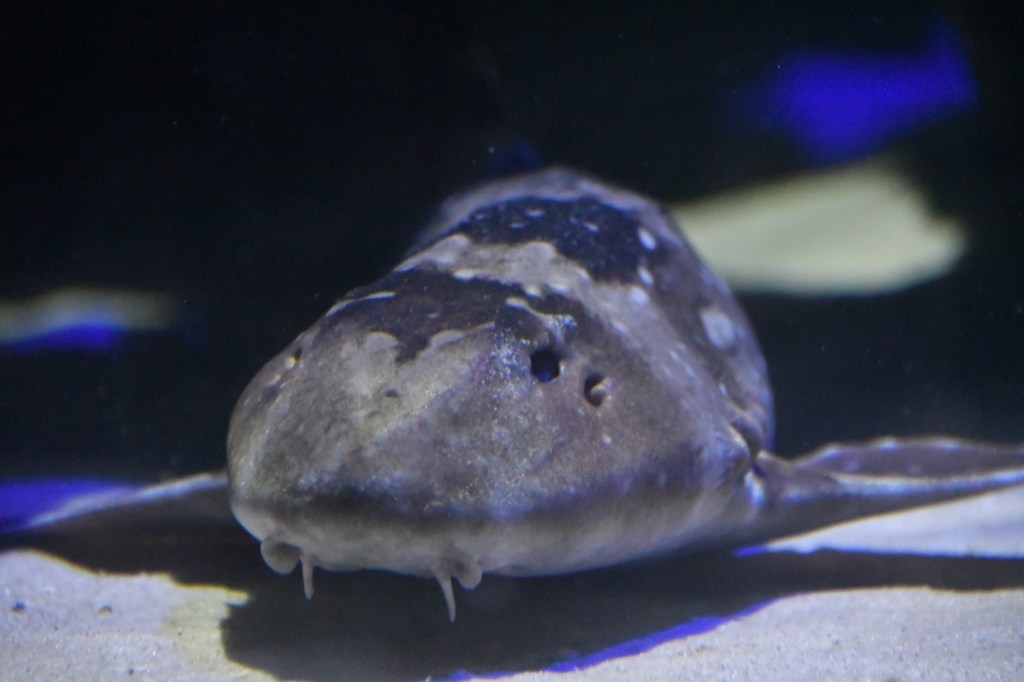
… Some sharks have those traits. The Thresher Shark has very big eyes, the Zebra Shark’s mouth looks pretty pudgy, and the Hammerhead Shark could be considered to have a goofily big head. There are also a number of little sharks including the Dwarf Lantern Shark which is only about 7 inches long! But I can agree that they don’t likely compare well to a kitten or a puppy.

When describing sharks many mention their wide gaping mouths filled with sharp teeth and beady black eyes, their expressionless faces and rippling muscles as they tear apart prey. Even though there are still people who adore them (myself included), the general consensus can be made that they lack the cuteness factor.
Secondly, they are known predators. There is no hiding the fact that sharks hunt other living creatures to survive. Many in the wildlife community understand that there is nothing wrong with that. Humans are omnivores who will also hunt for meat. Buuuut, this is where things get complicated. While many humans like meat, they don’t generally like to know about how it made it to their plates. Understandably, we get queasy at the sight of gore. So, in a strangely innocent yet hypocritical way, people don’t like predators. It is hard to feel caring for something that kills for a living.
This isn’t to say that sharks are in the wrong for this. I’m certain if predators were given chances to change their diets, they would opt for the more sedentary plant-eating lifestyle. Plants are safer, easier, and much more available. In another article I discuss what it means to be a predator for people.
It’s important to note that predators are actually somewhat less likely to kill people than their herbivorous counterparts. Because it is so costly in energy to hunt with a low chance of payout, predators are very picky and will choose the safer option if you are deemed too much work. On the other hand, animals like hippos, bulls, tapirs, and horses don’t want to eat you but are much more likely to kill you for territorial or protective reasons. So even being a predator doesn’t necessarily make sharks the bad guys.
The third and most important reason sharks seem easy to fear is none other than media-hype. Unfortunately, the same reason that made Jaws so popular is why sharks have had so much widespread fear against them. Media is like any other industry, it works to find what sells, which, in their case, is what gets the most attention.
News reports, creative stories, and movies have leapt on villainizing sharks from the very moment the first sign of fear was found. And, in a sad never-ending cycle, the fear which they propagate works in turn to create more media coverage. Rare stories of shipwrecks from storms or WWII leading to terrifying shark encounters are far more reported on than the everyday life in which no one is harmed. Culturally, they have become symbols for heartless manipulative people who are only there to hurt you. Rumors of them create crippling anxiety in so many people that it has become hard to explore our vast oceans.
It is a sad reality that much of the world has learned to dislike sharks, but they aren’t the bad guys. There actually isn’t any in this story. Truth be told, we are all victims- victims of our own fears and blind desire for profit, victims of ignorance and knowing of the truly terrible things that can happen if we’re unlucky- even victims of our own evolution as both predators and prey.
I have a strong love and admiration of sharks but I’m not here to argue about just what they are. They deserve just as much respect as any other animal and shouldn’t be harmed because we think they’ll harm us. And each and every day, research is discovering more and more about them. In particular, it is incredible to see that they are capable of emotion, something we couldn’t actually think was true until a recent study that certain sharks will actually leap from the water in frustration if they can’t catch their prey. They are fascinating powerful creatures that are so unlike us and I can only hope we let them stay around long enough to learn more about them.
 Wild Natura